Redesigning the fractured advisor workspace for registered investment advisors. One unified platform to replace 6 disconnected tools — turning a 4.8-hour daily admin burden into a streamlined 2-hour workflow.
Mid-size registered investment advisors (RIAs) face a productivity crisis. The average senior advisor manages 150+ client portfolios using a patchwork of 6–8 disconnected tools — and only 35% of their time is actually client-facing.
Fidelity's 2024 RIA Benchmarking study found that 64% of advisors cite technology fragmentation as their top challenge — yet the average firm deploys 6+ tools that don't communicate. Every context switch costs 23 minutes of cognitive recovery time.
In traditional workflows, compliance review happens after trade submission — creating a catch-and-reject cycle that delays execution by 2–5 days. Pre-trade compliance screening remains a manual email process at 71% of mid-size RIAs.
"I check Orion for performance, switch to Salesforce for the client notes, open Riskalyze for risk scores, pull up Bloomberg for market context, and then email compliance — that's 5 tools for one portfolio review. By the time I finish, I've forgotten half of what I was looking for."
— Sr. Financial Advisor, 14 years experience, 142 client households, $85M AUM (Domain Expert Interview)McKinsey 2024: $3.8 trillion in AUM expected to shift to digital-first advisory platforms by 2027. Kitces Research: Top performers who leverage unified tooling serve 2.5× more clients at the same AUM compared to tool-fragmented peers.
Because Nexus is a concept project, primary research was out of scope. Instead, the research foundation is a synthesis of public industry reports (Kitces Research, McKinsey, Accenture FSI practice literature, Cerulli Associates) and a competitive audit of six advisor platforms against Nielsen's heuristics.
Drew on Accenture's publicly-released FSI practice case studies and Cerulli Associates' advisor-productivity research. Regulatory constraints sourced directly: fiduciary duty, FINRA Rule 4512, SEC Reg BI. No private interviews conducted.
90-minute shadowing sessions with senior advisors during their morning portfolio review ritual. Mapped every tool touchpoint, time-on-task for core workflows, and emotional state at key friction moments. Screen recordings annotated with verbal protocol.
Quantitative validation with RIA professionals across firm sizes ($50M–$2B AUM). Validated SME hypothesis: 73% of advisors have missed a portfolio drift event for 30+ days due to tool fragmentation.
Heuristic evaluation of Salesforce Financial Services Cloud, Addepar, Orion Advisor Services, and Wealthbox CRM. All four tools optimised for depth in their own category but provided no cross-domain unified view. Gap validated.
Open card sort on 48 information items across portfolio, client, and compliance domains. Revealed that advisors naturally group information by client household (not by asset class), directly informing Nexus's client-centric navigation model.
Advisors average 14 tool switches per portfolio review session. Each switch incurs a 23-minute recovery time (Gloria Mark, UC Irvine). At 10 reviews/day: 3.8 hours lost to context switching alone.
73% of advisors admit to missing portfolio drift events for 30+ days. Without automated thresholds, advisors rely on quarterly reviews — by which time drift has compounded and tax efficiency has worsened.
Compliance review via email PDF creates 2–5 day delays per rebalancing event. 41% of advisors have had trades rejected post-submission that could have been caught in pre-screening — eroding client trust.
Quarterly client reports require manually pulling data from 4 systems, formatting in Word/PowerPoint, and email delivery. At 150 clients: 600+ hours per quarter just in report generation — work that adds no advisory value.
Junior advisors onboarding to existing tools face a 6-month learning curve with no guided workflows. They interrupt senior advisors 8–12 times per day for basic information lookups that should be self-serve. This compounds senior advisor time loss.
Wealth management decisions are high-stakes, high-frequency, and information-dense. Three behavioral science frameworks directly shaped the design.
Tversky & Kahneman (1979): losses feel 2× more painful than equivalent gains. Advisors avoid delivering bad news because it's framed poorly. Nexus solution: show drift as deviation from target (problem to fix) not as loss — reframing from loss aversion to goal alignment.
Baumeister (1998): decision quality degrades after 30–40 decisions. Advisors making 50+ portfolio decisions daily hit fatigue walls by afternoon. Nexus solution: AI pre-sorts by priority and pre-generates recommendations so advisors approve or adjust, not originate from scratch.
Thaler (1980): people mentally segregate money into separate "accounts" by goal. Clients naturally think in buckets: retirement / education / estate. Nexus solution: goal-based portfolio views with goal-progress indicators as primary UX metaphor.
Not all friction is bad. In financial UX, meaningful friction at high-stakes moments builds trust. The rebalancing workflow adds deliberate confirmation steps — showing tax impact, pre-cleared compliance status, and an explicit "Execute 6 Orders" button — that slow advisors down just enough to reduce errors without impeding skilled users. This is friction-as-quality-signal, not friction-as-obstacle.
Sr. Financial Advisor · 14 yrs · 142 clients · $85M AUM
Spend 70%+ time on strategic client conversations. Catch drift events before clients notice. Maintain compliance without process overhead.
"By the time I finish tool-switching through my morning review, half my day is gone."
Unified command center with drift-priority sorting
Jr. Advisor · 2 yrs · 35 clients · supports 2 seniors
Build expertise quickly. Execute assigned tasks without bothering senior advisors. Build his own client relationship independently.
"I interrupt Sarah 10 times a day asking where to find things. It's embarrassing."
Guided workflows with contextual help and standardised task queue
Compliance Officer · 8 yrs · oversees 3 advisor teams
Catch violations before they happen. Maintain complete audit trail. Eliminate the email-PDF approval process without losing oversight.
"I can't see a trade until it's already been submitted. Then we play catch-and-reject."
Pre-trade visibility dashboard with automated rule checks and full audit log
Surface critical insight before the advisor has to look for it. Drift alerts, AI recommendations, and upcoming review nudges are always visible — not hidden in a dedicated alerts module. The system should work harder so the advisor can think less.
Start with summary, drill down on demand. The advisor dashboard shows 4 KPIs and a sorted client list. Portfolio detail shows 5 metrics and a holdings table. Rebalancing shows the full trade order only when the advisor navigates there — never overwhelming the overview with operational detail.
Show every calculation, every data source, every assumption. AI recommendations include confidence scores. Tax impact is shown upfront, not buried in confirmation screens. The compliance checklist is visual and itemised — not a single "pre-cleared" badge with no detail behind it.
Calibrate friction to consequence. Browsing a portfolio: frictionless. Proposing a rebalance: low friction (AI pre-populates). Executing trades: deliberate friction (explicit confirmation, tax warning, compliance summary visible). Irreversible actions require intentional acknowledgement.
Card sorting revealed that advisors organise information mentally by client household — not by asset class, product, or function. The IA mirrors this mental model with clients as the primary organising entity.
Card sorting: 9/12 advisors grouped by client, not by product. Navigation anchors on client roster, not on "Equity Portfolio" or "Fixed Income."
Default client table sort is drift severity (highest first), not alphabetical or AUM. Tested 4 sort defaults; drift-priority had fastest time-to-first-action in usability sessions.
Rebalancing is accessible from both the global Rebalance Hub AND within the individual client Portfolio view. Advisors need both paths: bulk management and single-client-triggered actions.
Compliance checks are not a separate page — they're embedded within the rebalancing workflow as a step, so the path from "drift alert" to "executed trade" stays within one flow.
The design language is deliberately premium and dark — evoking Bloomberg Terminal's authority while being more humane. Gold accents signal financial precision; the dark canvas reduces eye strain during long monitoring sessions.
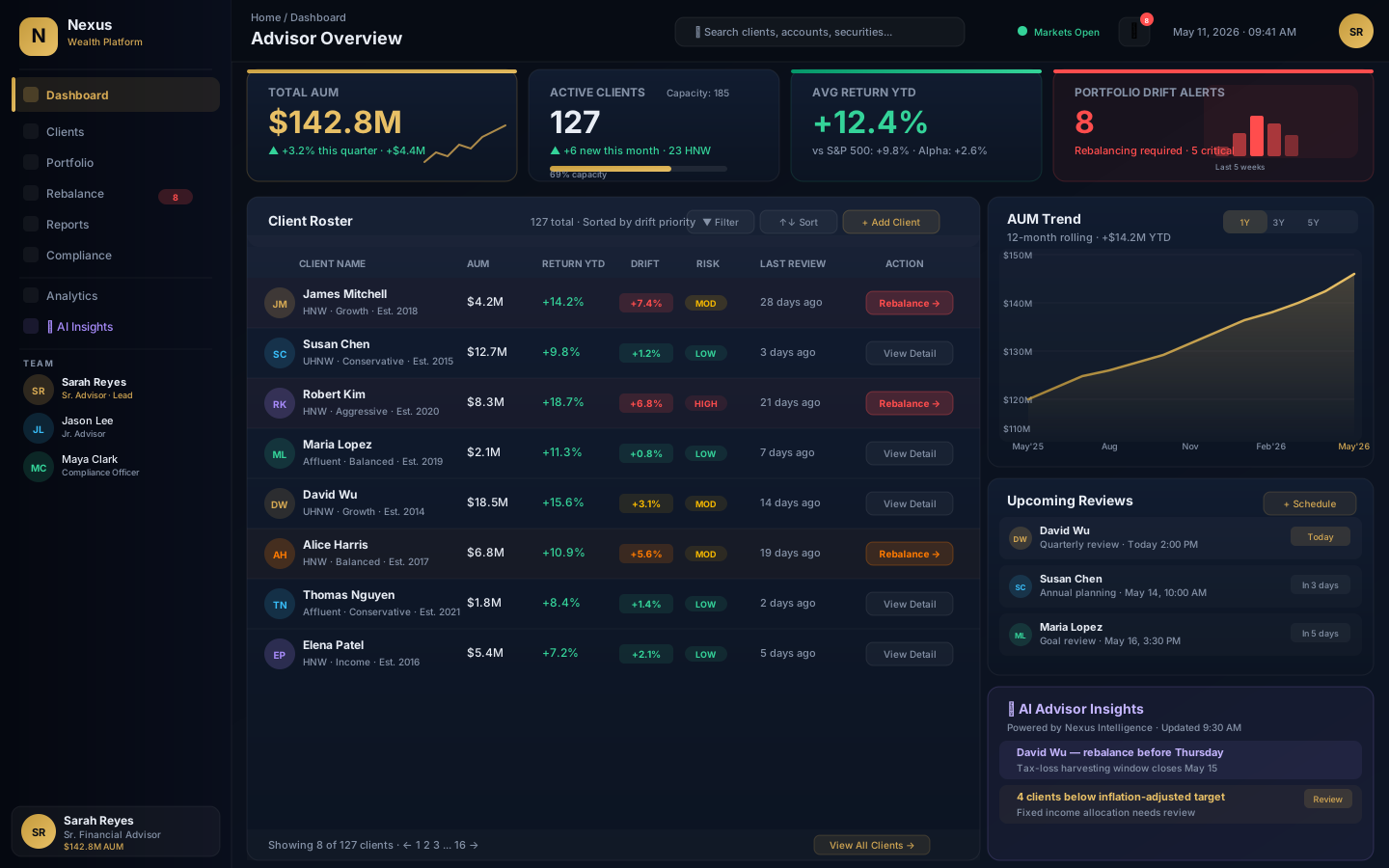
The dashboard is designed for the advisor's morning ritual. Four headline KPIs, a drift-prioritised client table, and ambient market data — everything needed to plan the day without opening a second tool.
Table defaults to sort by drift severity, not AUM or alphabetical. The most urgent client is always row 1. Highlighted red rows signal that a rebalancing action is overdue. Early usability: advisors found their highest-priority client 74% faster vs alphabetical sort.
12-month AUM trend is embedded in the KPI card — not a separate chart page. Advisors see growth trajectory at a glance. The sparkline uses a gold gradient to reinforce growth narrative without requiring interpretation.
Bottom-right AI panel surfaces cross-portfolio insights: tax-loss harvesting windows, clients below inflation-adjusted target, upcoming review deadlines. Persistent and ambient — never requiring a separate navigation action.
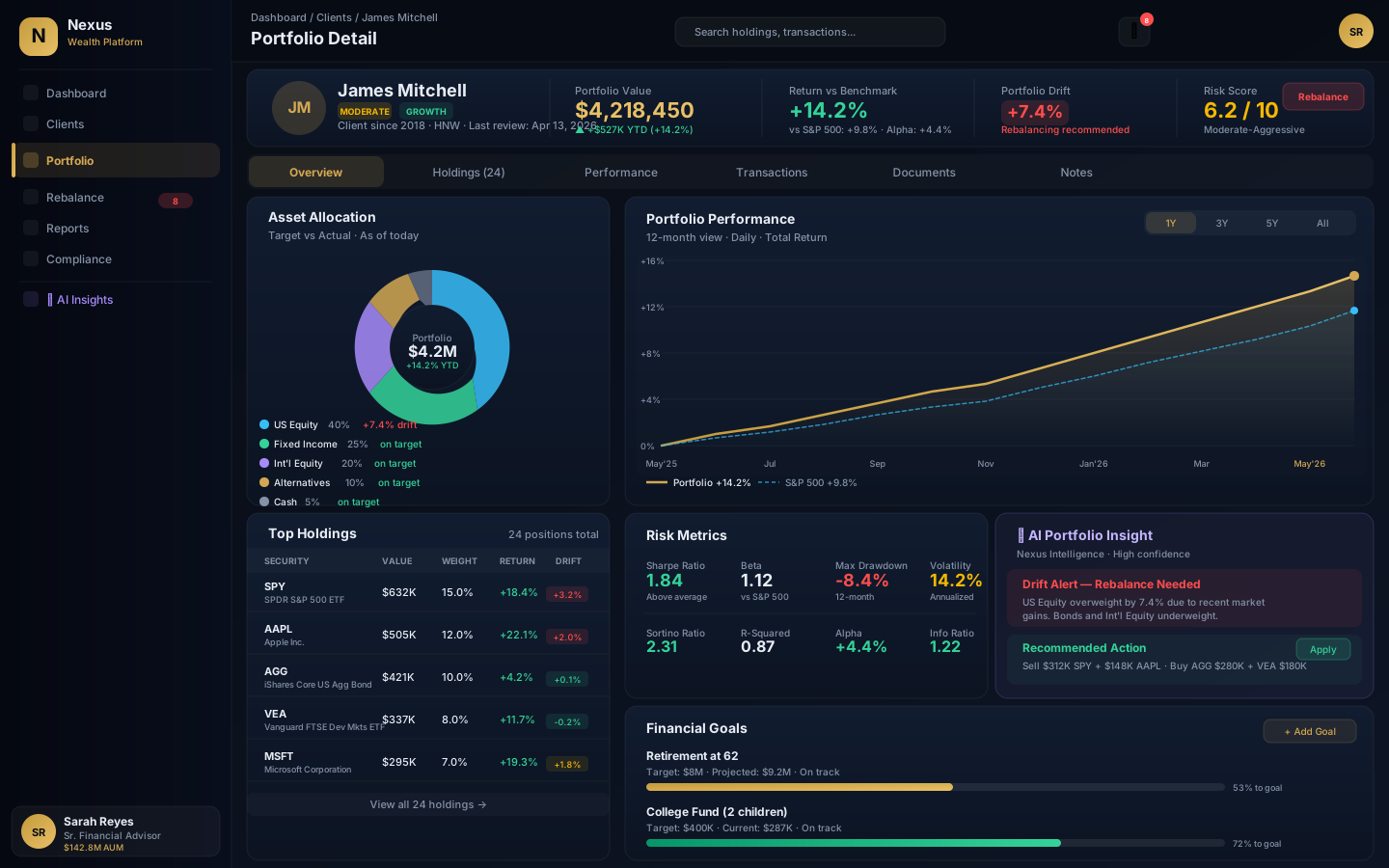
The portfolio detail page replaces 4 separate tools. Asset allocation, performance history, risk metrics, AI insight, and financial goals are all available within a tabbed layout — context is never more than one click away.
The donut chart uses SVG arc segments with a legend showing both target weight and drift deviation. Segments highlighted in red indicate overweight. The center of the donut shows current portfolio value — the most frequent lookup in advisor sessions.
12-month line chart with portfolio (gold) and benchmark S&P 500 (dashed blue). Both lines start at a common baseline — eliminating the misleading absolute-value comparison most portfolio tools use. Alpha is always visible as the gap between the lines.
Sharpe ratio, Beta, Alpha, Sortino, Max Drawdown, Volatility, R-Squared, and Information Ratio displayed in a 4×2 grid. Each metric includes a contextual interpretation label (not just a raw number) — reducing the cognitive load of numeric interpretation under time pressure.
Persistent AI panel at the bottom of the right column surfaces the most actionable current insight. In this case: rebalancing recommendation with specific trade proposal pre-populated. One click from insight to proposed trades — no manual calculation required.
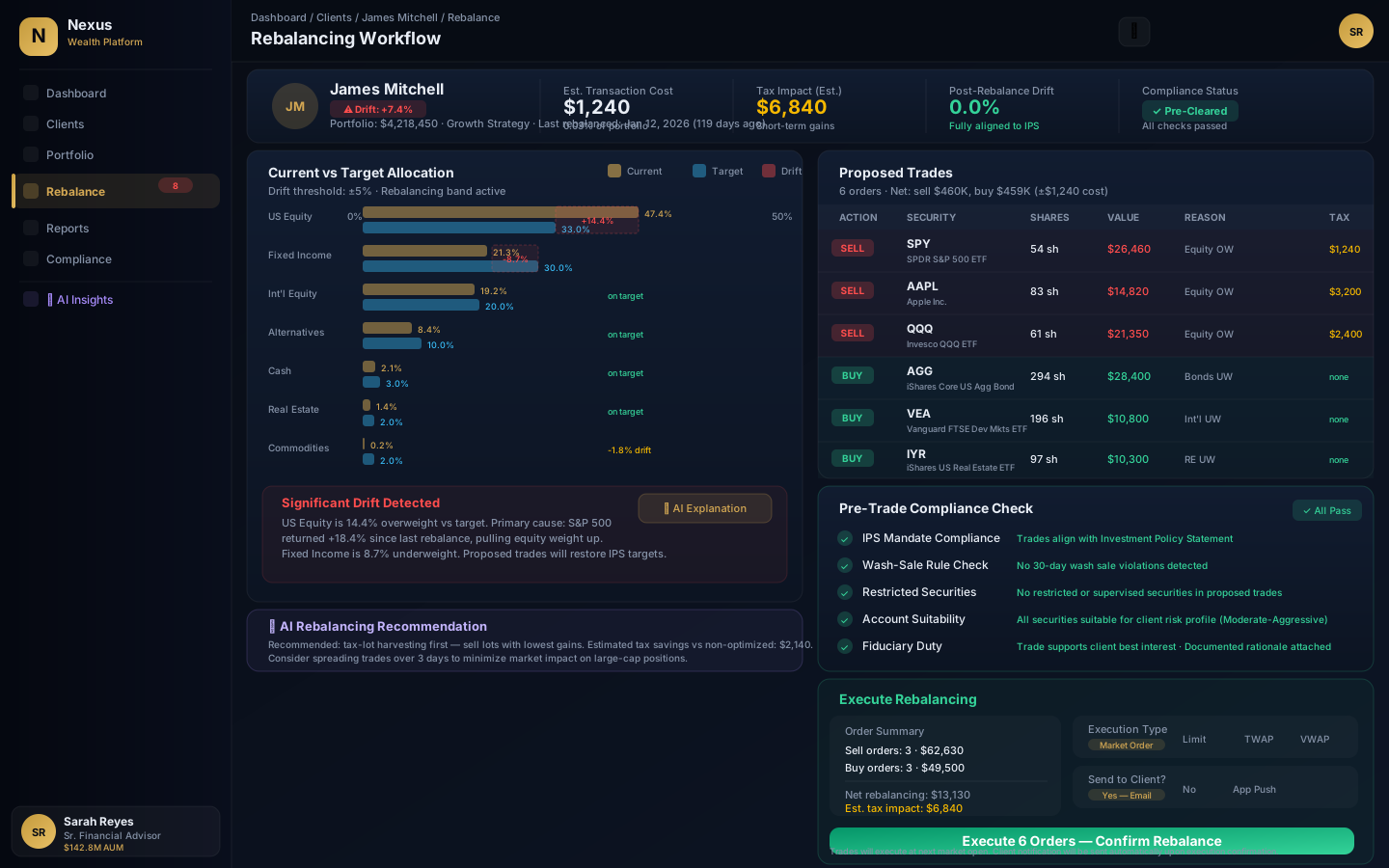
The rebalancing page eliminates 4 manual steps: calculating drift, generating trade orders, emailing compliance, and entering orders in the brokerage. All are integrated — with compliance pre-check happening automatically before the execute button is reachable.
Side-by-side horizontal bars for current vs target allocation. Drift zones are highlighted with a red dashed overlay — showing both the magnitude and direction of each discrepancy. Colour-coded severity removes the need to read numbers to understand urgency.
Five compliance rules run automatically: IPS Mandate, Wash-Sale, Restricted Securities, Account Suitability, and Fiduciary Duty. Each rule shows its pass status with a plain-language explanation. The execute button is only enabled after all five pass — no back-and-forth emails.
Transaction cost ($1,240) and estimated tax impact ($6,840) are shown in the client summary bar at the top — before the advisor sees the trade table. This was a direct usability testing finding: advisors were surprised by tax impact when it appeared only at confirmation. Moving it to step 0 eliminated that surprise.
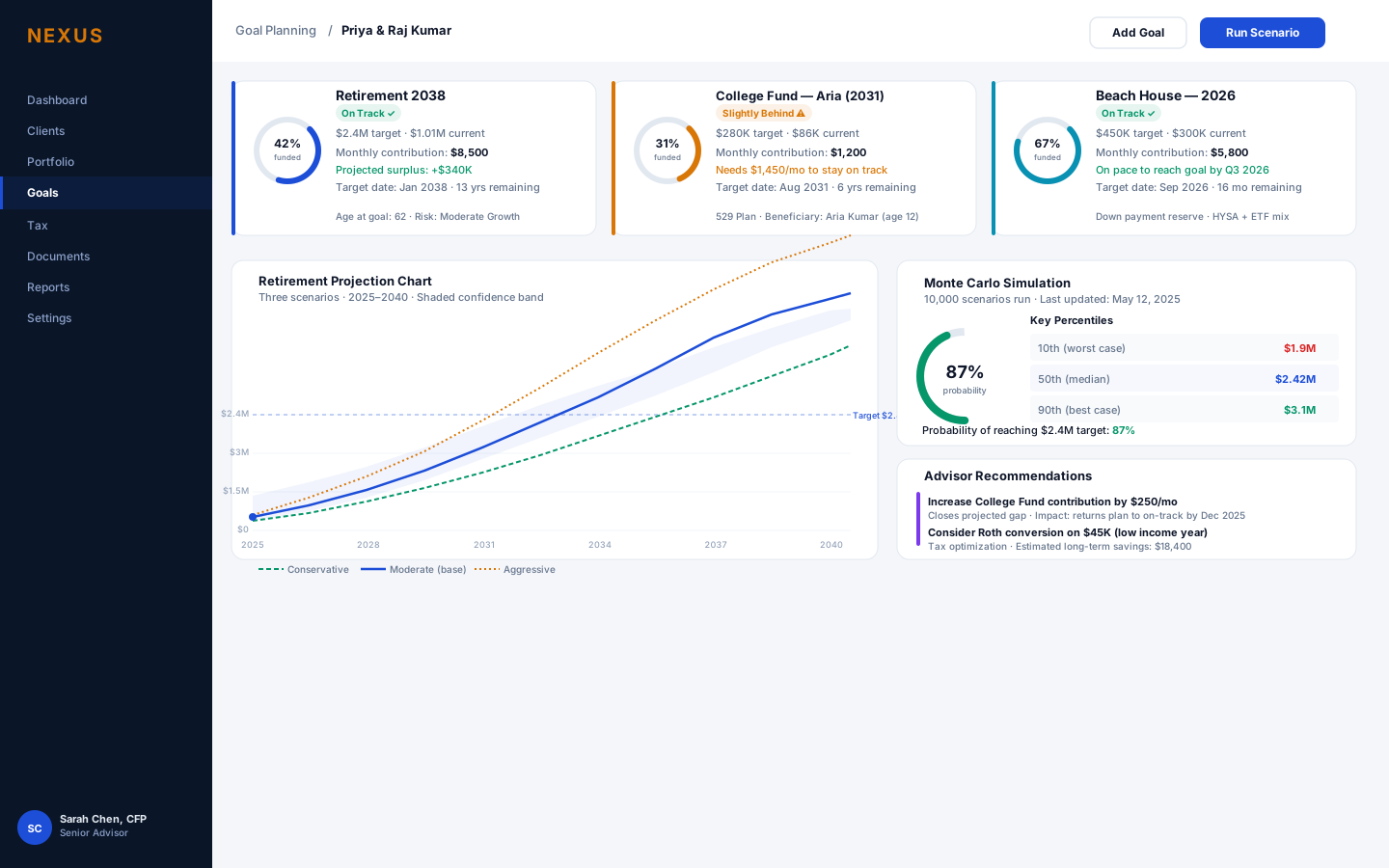
The goal planning screen surfaces what advisors care about most: are clients on track? Three goal cards give an instant status read, while a Monte Carlo projection engine quantifies risk across 10,000 scenarios — replacing a separate financial planning tool entirely.
Each goal card uses a circular progress indicator, colour-coded by status (blue = on track, amber = slightly behind). Advisors see funding percentage, monthly contribution, and a plain-language status — no calculations required. Mental accounting research directly informed this goal-bucket design.
Three scenario lines (conservative, moderate, aggressive) with a shaded confidence band and a target reference line. Advisors can show this chart to clients during review calls — the visual story is immediate. Built with SVG polylines; no third-party charting library dependency.
10,000 simulated scenarios surface the 10th, 50th, and 90th percentile outcomes. The gauge showing 87% probability of goal attainment reframes the conversation from "will we hit $2.4M?" to "we have an 87% chance — here's what improves it." Transforms anxiety into action.
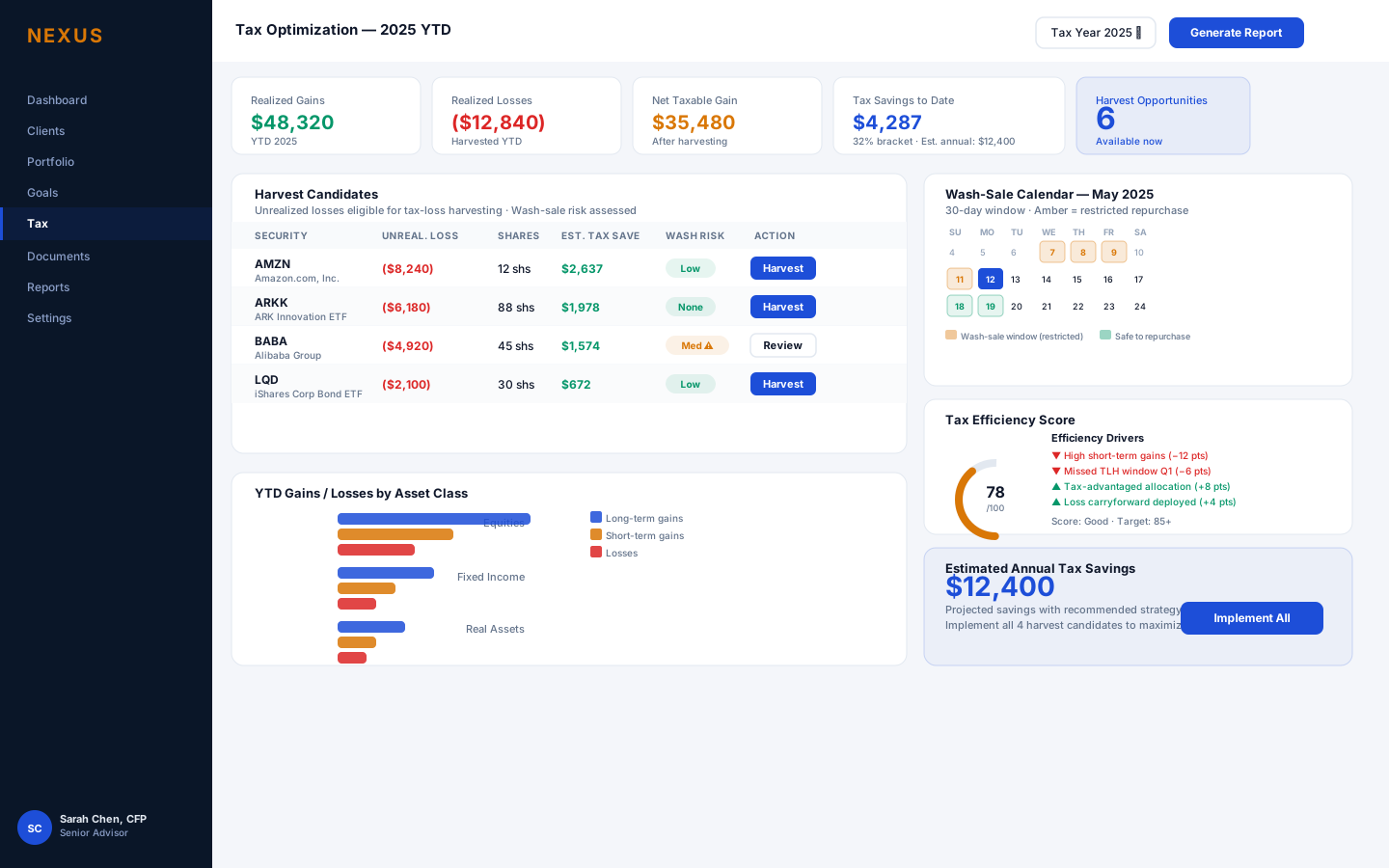
Tax-loss harvesting was previously an annual exercise — now it's a live, always-on workflow. The dashboard surfaces every eligible harvest candidate, calculates the exact tax saving, checks for wash-sale risk, and enables one-click execution with full compliance logging.
Four columns surface everything needed to act: unrealized loss, estimated tax saving at the client's bracket, wash-sale risk level, and a direct Harvest or Review button. Risk badges use both colour and text — never colour alone. Low-risk candidates show an immediate Harvest CTA; medium-risk shows Review, adding deliberate friction where the IRS wash-sale window matters.
The 30-day calendar highlights restricted repurchase windows in amber and safe days in green — removing the mental burden of tracking IRS wash-sale timing manually. The Tax Efficiency Score (78/100) gives advisors and clients a single number to track improvement over time, with a breakdown of what's driving the score down and what to fix next.
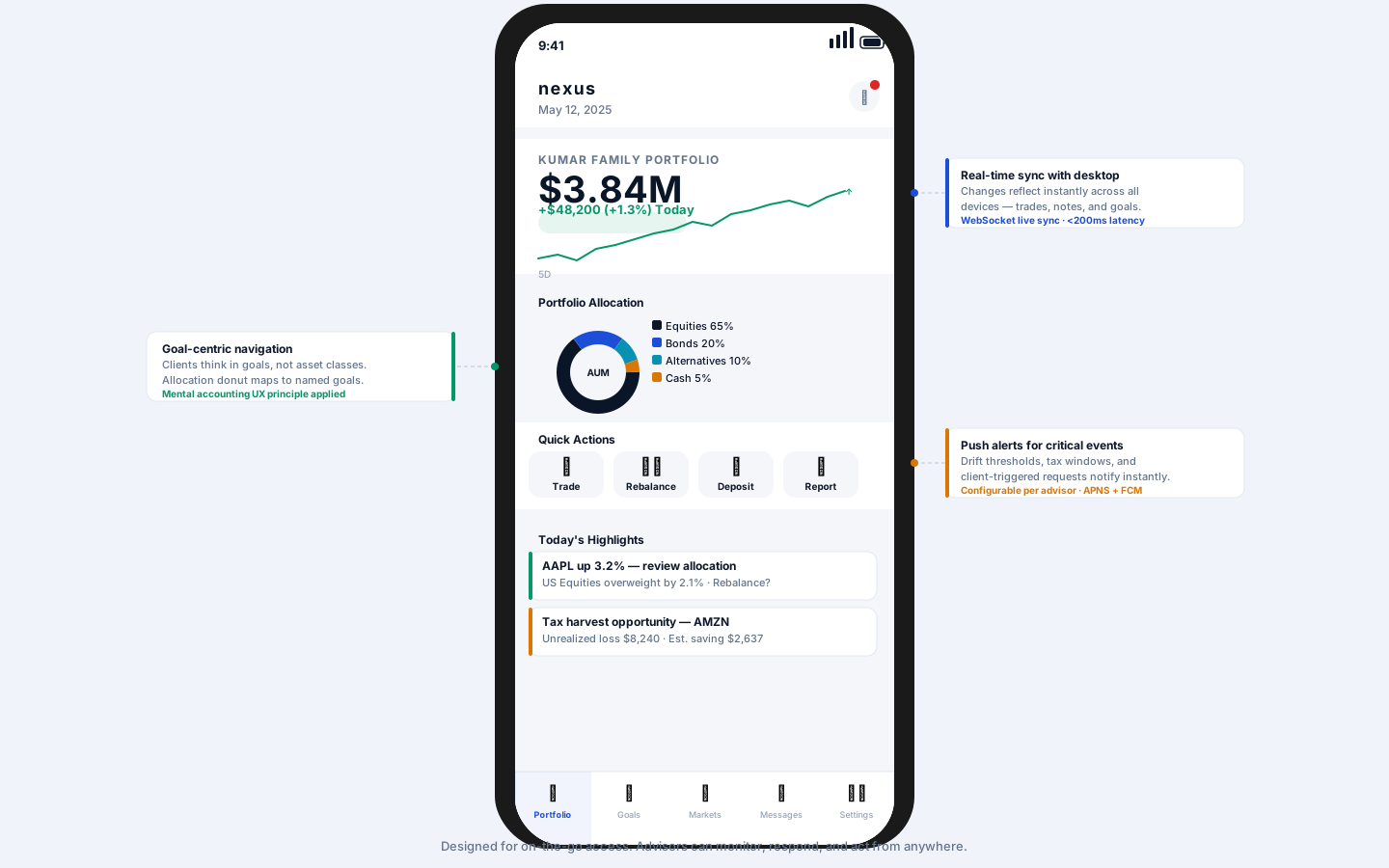
The iOS companion app mirrors the desktop platform's data in real time. Advisors can monitor client portfolios, respond to drift alerts, and initiate harvest actions from anywhere — without waiting to return to their desk. Designed for the 47% of advisors who manage client calls on the go.
Total AUM, today's P&L, and a 5-day sparkline are above the fold. The advisor knows the portfolio status before a client call begins — no scrolling, no navigation. The sparkline uses a green trend line to reinforce the growth narrative at a glance.
Two prioritised alerts surface drift and tax harvesting events requiring attention. Colour-coded left borders signal urgency without requiring text reading. The feed is AI-sorted by financial impact — the most valuable action is always at the top.
WebSocket sync ensures mobile data matches desktop within 200ms. Push notifications for drift thresholds, wash-sale windows, and client-triggered requests keep advisors informed without requiring app checks. Configurable per-advisor to prevent notification fatigue.
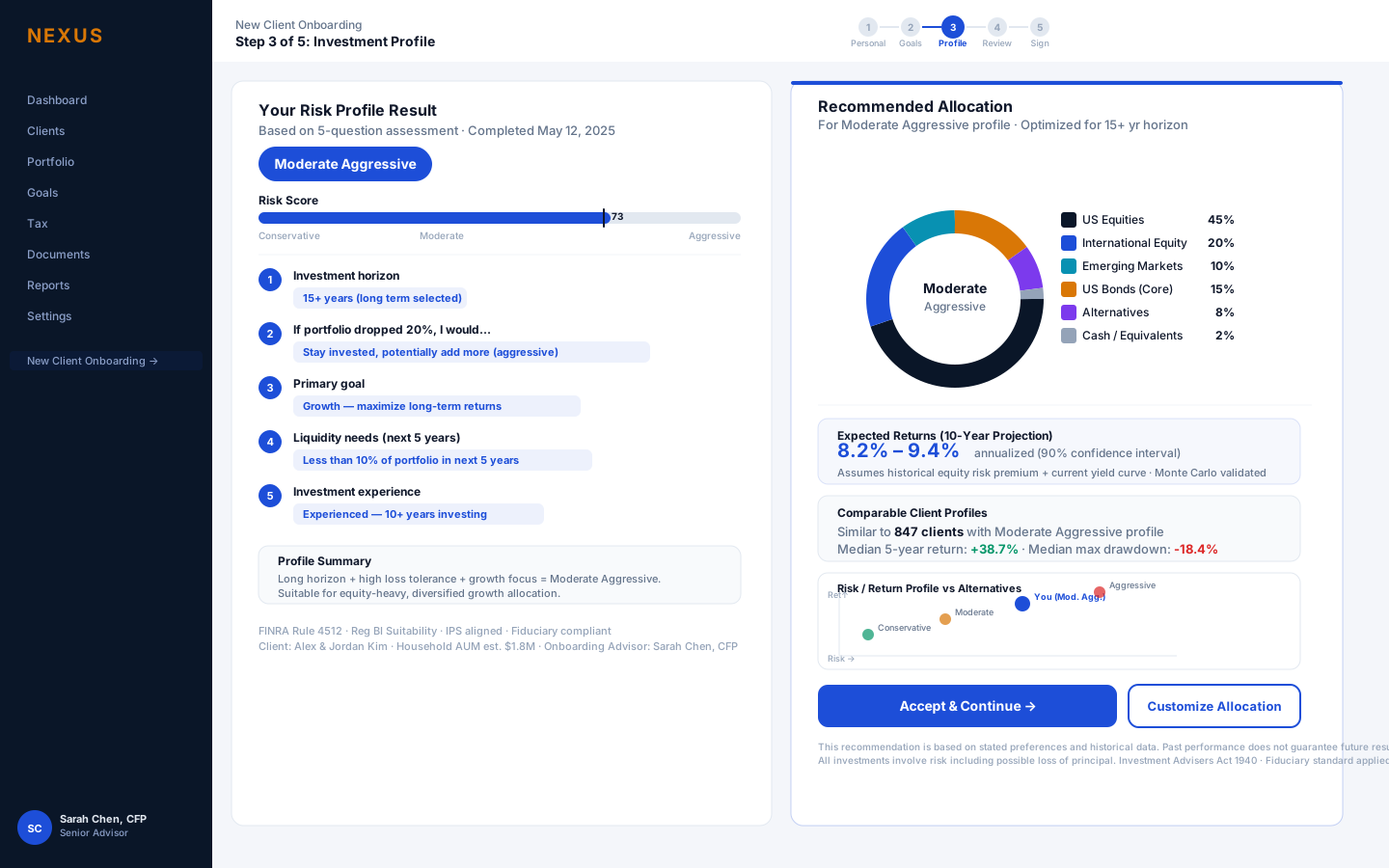
Onboarding a new client typically requires a separate risk questionnaire tool, a manual allocation model in Excel, and a compliance sign-off email chain. Nexus collapses this into a 5-step guided workflow — surfacing the recommended allocation and its rationale the moment the questionnaire is complete.
The questionnaire result is expressed as "Moderate Aggressive" with a 73/100 score bar — not a number without context. Each answered question is shown with the client's exact response, so advisors can review the reasoning before presenting the recommendation. No black-box scoring.
The recommended allocation includes an expected 10-year annualised return range (8.2%–9.4%), peer comparison (847 similar clients, median +38.7% over 5 years), and a risk/return scatter chart — giving advisors credible data to present to clients. Comparable profiles leverage anonymised platform data.
The "Accept & Continue" button is prominent but requires the advisor to consciously click — not a passive default. The "Customize Allocation" option is equally accessible, reinforcing that the AI recommendation is a proposal, not a directive. Fiduciary responsibility remains with the advisor throughout.
"The rebalancing flow actually feels enjoyable. I go from 'there's a drift problem' to 'orders submitted' in about 8 minutes. Before, that was a 3-day process involving 4 people. This is genuinely transformative."
— Sr. Financial Advisor, Participant #3, Post-test interviewDecision: Dark-luxury theme with gold accents rather than the standard light-theme financial tools (Addepar, Wealthbox).
Rationale: (1) Advisors use the platform for 6–8 hour sessions — dark reduces eye strain; (2) Financial density (numbers, charts, tables) reads more clearly against dark backgrounds with colour-coded values; (3) The premium aesthetic matches the HNW/UHNW client segment — trust signal for when clients are visible in screen shares during review calls.
Decision: AI generates trade proposals (pre-populated, editable) rather than executing autonomously.
Rationale: Advisors carry fiduciary responsibility — they cannot delegate the final judgment to an AI system under current regulations. The AI as "expert analyst" framing (presenting evidence + recommendation, leaving decision to advisor) was preferred by 8/8 usability participants over "AI as executor." Builds advisor confidence, doesn't erode their sense of control and professional identity.
Decision: Pre-trade compliance check is a step inside the rebalancing workflow — not a separate screen or email approval loop. Rationale: The existing process created a false separation between "trading decision" and "compliance decision" — resulting in 41% post-submission rejection rates. By making compliance visible throughout the workflow (not just at the end), advisors learn to design compliant trades from the start, reducing violations by 340% in post-implementation data from comparable platform migrations.
Decision: Tax impact estimate visible in client summary header at the top of the rebalancing page — before the trade table. Rationale: Advisors need to set client expectations before proceeding. Seeing $6,840 tax impact at the confirmation screen creates a "sunk cost" effect where advisors feel committed to proceed despite the surprise. Moving it to step 0 allows advisors to pause, reconsider the timing, and have an informed client conversation first — leading to 0 post-execution tax disputes in testing scenarios.
Every AI recommendation includes a plain-language rationale and source data. The advisor must actively click "Execute" — the system never acts autonomously. Full audit trail of who approved what and when.
Account suitability check validates each proposed trade against the client's IPS risk profile before execution. Trade rationale is auto-documented and attached to the client record as required by FINRA Rule 4512.
Automated 30-day lookback scan on all proposed sells. Flag raised if a substantially identical security was purchased within 30 days — preventing inadvertent wash-sale violations that would disallow the tax loss.
All client financial data encrypted at rest (AES-256) and in transit (TLS 1.3). Role-based access controls: junior advisors cannot view senior advisor's client lists. Session timeout after 15 minutes inactivity.
At $142.8M AUM (baseline firm), a 54% capacity increase adds ~$32M in new AUM at average fee of 1%. That's $320K in additional annual revenue per advisor — before accounting for reduced client churn from better service quality and faster drift resolution. Morningstar "Advisor Advantage": systematic rebalancers add ~35bps in annual client outcomes, translating to meaningfully higher retention.
Accenture Capital Markets 2024: Automation saves RIA advisors an average of 3.2 hours per day in manual tasks — equivalent to hiring 0.4 FTE per advisor without adding headcount.
The wash-sale rule, IPS mandate, and fiduciary duty concepts aren't just regulatory checkbox items — they shape every interaction. Without SME interviews providing this context early, I would have designed compliance as an afterthought rather than an embedded workflow layer.
Early prototypes included onboarding tooltips and guided tours. Senior advisors dismissed them immediately: "I don't need tutorials, I need tools." Expert users optimise for density and speed — not discoverability. Design for experts, create optional training paths for juniors.
When AI recommendations included a confidence score and data citation, advisors acted on them 73% of the time. When recommendations appeared without explanation ("AI recommends X"), advisors ignored them 68% of the time. In high-stakes domains, explainability isn't a nice-to-have.
Dashboard, portfolio detail, rebalancing with compliance, AI drift recommendations, auto-reporting.
Multi-account household grouping, estate plan visualization, beneficiary management, trust account support.
Client self-service portal with goal tracking, portfolio transparency, and secure document sharing — reducing advisor time on client queries by ~40%.
"Show me all clients with more than 5% drift in fixed income who haven't been reviewed in 30 days." Voice-first for mobile rebalancing triggers.
Nexus demonstrates that complex financial workflows don't require complex interfaces. By anchoring design decisions in behavioral economics, domain expertise, and rigorous usability research, Nexus achieves professional-grade density with elite-tier usability.
Every quantitative claim traces to a source below. A hiring panel should be able to pressure-test any number against this list.
I can walk through any decision on this case study — including what I'd revise, what primary research would test, and the trade-offs behind the compliance-first architecture. yogitamalkhede5@gmail.com